Turkish Air Traffic Growing throughout 09, Accelerating in Second Half

22/11/2009 by sblb

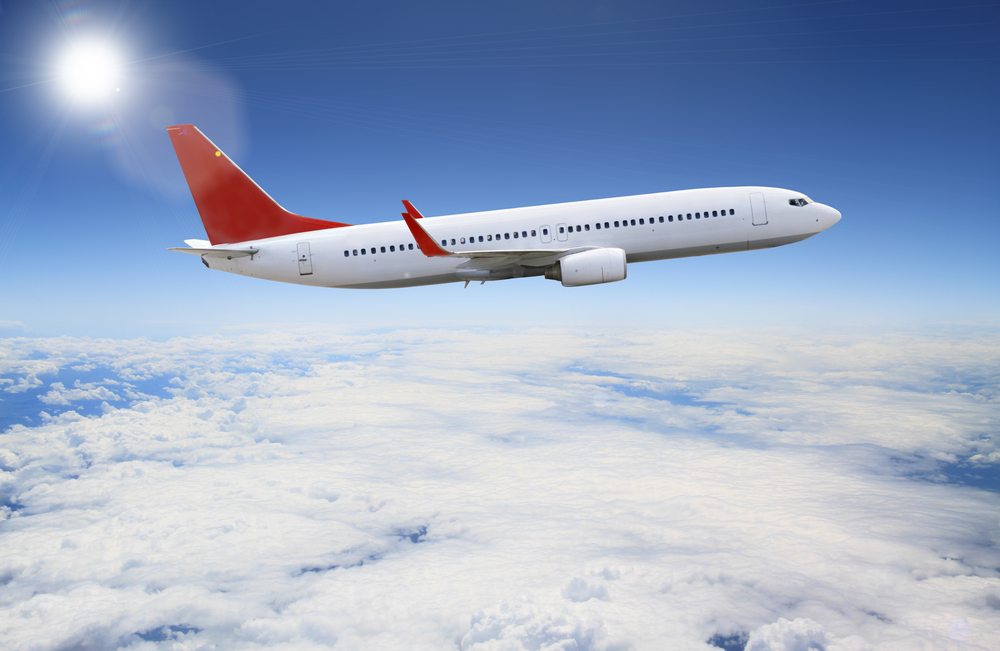
The Turkish airline industry has continued to see significant growth this year, with growth in traffic at all Turkey’s main airports. New reports from several organisations and individual airports point to growth in both domestic and international traffic through Turkish airports this year – of up to 40% in some cases.

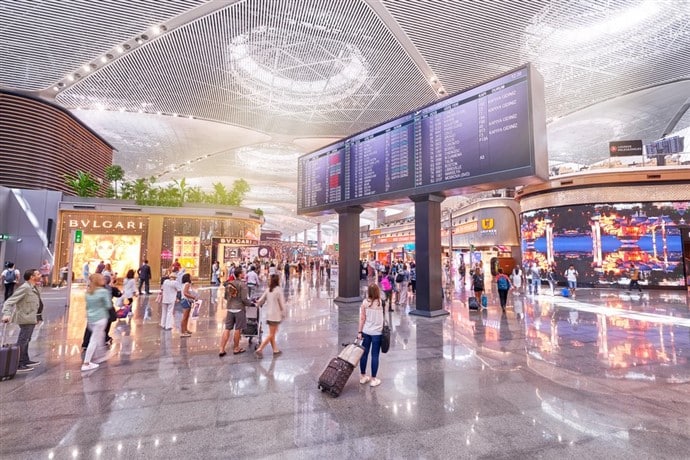
Firstly the most impressive growth is in Istanbul’s Sabiha Gökçen, with traffic up 41% so far this year. This is based on a 50% growth in Domestic traffic, and a 20% growth in international traffic. Sabiha Gökçen is now the fourth busiest airport in the country and is likely to overtake Izmir in 2010, especially as it recently opened its New International Terminal.

Istanbul’ Ataturk airport is also doing well, with a 3% growth in international traffic in the first half of the year. According to the report this is because of new international routes started by Turkish Airlines, to Benghazi (Libya), Gothenburg (Sweden), Mashad (Iran), Nairobi (Kenya), Sao Paulo (Brazil), Toronto (Canada) and Ufa (Russia), and more. Domestic traffic fell 3% at Istanbul Ataturk.

This growth continued in subsequent months, and by the end of October international traffic through Istanbul Ataturk was up 6.6%.

Country-wide traffic increased by 4% in the first half of the year, with passenger numbers growing at 11 of the country’s top 12 airports in the second quarter. This was based on a 10% growth in domestic traffic, with international traffic down just 3%.

This growth has accelerated in the second half of the year. According to DHMI traffic to Turkish airports increased by 14% in September, and by 10% in October, including a significant growth in international traffic. Country-wide traffic for the 10 months ending October was up 5.2%, on an 11.9% increase in domestic traffic, and a 0.1% increase in international traffic. The latter a significant turnaround from the 3% contraction in the first half of the year.

The increasing traffic to Turkey’s airports backs up recent reports from the World Tourism Organisation and the Turkish tourism ministry, of rising tourism to Turkey in the first half, and first three quarters of 2009.

Europe wide airport traffic has been increasing in recent months. Analysis of schedule data provided by the world’s airlines to OAG reveals that seat capacity at Europe’s over 600 airports at the beginning of the winter season is down just 2% versus the same period last year.

Turkey Construction Output to Grow Among Fastest in World in Coming Decade — Research

19/11/2009 by sblb

The global construction industry will grow by 70% over the next decade as output in emerging markets overtakes that of established markets, according to new research.

The Global Construction 2020 report, from market analysts Global Construction Perspectives and Oxford Economics, forecasts that total construction output will rise from the current $7.5 trillion to to $12.7 trillion by 2020. Residential construction will account for 40%of that according to the report.

Turkey is mentioned in the report, along with Vietnam and Nigeria as having among the fastest growing construction output in the world, alongside the great emerging markets of India and China.

Turkey’s mention as one of the fastest growing markets in global construction output comes as no surprise to us. The report says that this transformation of emerging markets overtaking their established counterparts, is because of massive infrastructure development in those countries, coupled with their phenomenal population growth and GDP projections.

We have been watching the rapid pace of growth in Turkish infrastructure development for several years now.

It is fairly obvious to anyone who follows the markets that construction output, as well as output in similar sectors, would grow much faster in emerging markets than in established ones in coming decades. And once you know that, then, Turkey, being one of the largest and fastest growing emerging markets is obviously going to see construction output grow among the fastest in the world.

As Turkey grows into one of the fastest growing and most vibrant emerging markets; a regional power and then a global power, property values will continue to grow in value, steadily as they always have. EU membership will also be granted when the benefit to the EU can no longer be ignored. Now is most definitely the time to make your investment into this cycle with a carefully chosen property purchase.

Like this post, please subscribe to our feed via RSS or Email

The Future is Bright for Turkish Property

14/11/2009 by sblb

The future is bright for Turkish property, according to the consensus of opinion. It is hard to find a report that forecasts anything but continually increasing demand for holiday lets as tourism rises, and solid capital growth in the next few years.

A recent article in Country Life, one of the UK’s longest standing and much loved property magazines – it focuses on the higher end of the world’s markets. The article, titled: Turkey: the New Property Hotspot contained several positive forecasts on the Turkish property market, including one from our own, very cautious Julian Walker.

"There are plenty of other buyers apart from the British in the market, which suggests prices in Turkey will remain stable. It wasn’t drawn into mass development on such a large scale as other developing countries. The Turks are proper market traders-we could probably learn a thing or two from them," he said.

Julian also told Country Life that people are tending to buy bigger properties at the moment, which has increased the average sale price, and that people are currently achieving yields of between 6% and 10% on their Turkish properties.

"It’s not unreasonable, to expect a rental yield of between 6% and 10% a year from your apartment or villa in Turkey. A detached two-bedroom villa with a pool in an exclusive part of the country rents out from £600 per week, half as much as an average villa in the South of France, although rooms, balconies, gardens and pools all tend to be bigger," he said.

The article also quoted Hurriyet daily news, which is forecasting a property boom in 2010, Deutsche Bank forecasting a growth of between 5% and 6% consistently over the next 10-15 years, and Nick Barnes, an independent property research analyst who believes that Altinkum, Belek and the less developed areas around Bodrum and Didim will be the focus of growth for the next few years. The Financial Times recently voting Turkey in the top 10 investments for 2009 was also mentioned.

In my opinion — as the anonymous author of this blog — Turkey property is going to increase massively in popularity with buyers from around the world in the coming years. This is because tourism is going to continue growing exponentially, because the vast country has something for everyone. Tourism growth means rental yield growth, and after the crunch rental income is the first consideration on almost every property investment currently being made.

The Turkish Lira is currently the only currency continuing to show weakness against Sterling, and there is a definite advantage to buying now, while demand is fairly low, which is keeping price growth subdued, and while the weakness of the Lira is adding value for money.

All that is before we even mention EU membership, which does seem to be moving forward at last. Of course it may become essential as resources become more and more scarce, to improve relations with the Middle East’s pariah’s using Turkey as go-between.

View Turkey property for sale on the main Spot Blue site.

Like this post, please subscribe to our feed via RSS or Email

Spot Blue talk to Hurriyet on How to Safely Buy Property in Turkey

13/11/2009 by sblb

The interview we did with Hurriyet daily news, when they dropped by the office 2 weeks ago, has been published in the newspaper today.

We have decided to blog about it — okay partly for a bit of free-Friday shameless promotion and back-pattery — because the article raises some very important points about both the Turkish property market and how to buy in it from a foreign perspective.

In the article, our director David Walker told Hurriyet, in no uncertain terms, why people can end up losing out financially when buying a property in Turkey.

“For many buyers, the process is this: they get on a plane, have a holiday in Turkey, see the house, talk to the real estate developer, the developer insists, the customers pay and the developer disappear. Or the customers give the money to a real estate dealer, who is never to be seen again.”

Spot Blue always recommends that buyers speak to a lawyer beforehand, and we give contact details of UK based specialists in Turkish law.

David, and Ömer Yetgin, chairman of the Bodrum Real Estate Dealers Association, gave the same advice to potential buyers about researching the property status, the land ownership, and mking sure the dealer is credible and registered.

The official statement on Consulate General for Turkey in London website reads:

"Foreign nationals who wish to buy real estate in Turkey are also advised “not to sign legally binding sales contracts or make any payments before obtaining information at the correct Land Title Registry Office about the immovable involved” and “not to initiate procedures before investigating the sales persons or agencies involved, and to refrain from conducting business with persons or agencies who are not able to provide sufficient proof of their credibility.”

Spot Blue recently made available to the public the details of our due-diligence reports into every developer we work with, how long they have been operating, how many completed developments, etc etc, find out more here: http://www.spotblue.co.uk/links1.asp?id=19

Like this post, please subscribe to our feed via RSS or Email

Miliband Puts Weight of UK Behind Turkey’s Accession into the EU

06/11/2009 by sblb

British foreign secretary David Miliband has put his weight behind Turkey’s EU bid to become a full member of the European Union, while visiting the country.

"Turkish accession to the European Union will be a tremendous benefit to Ankara and to the region," he said.

At a joint press conference with Turkish Foreign Minister Ahmet Davutoglu in Ankara, Miliband called for a quick settlement to the Cyprus issue, a major obstacle in Turkey’s EU membership bid, according to the Anatolia news agency.

As well as the EU issue Miliband reportedly discussed UK/Turkish relations and regional developments whilst meeting with his opposite number and Turkish Prime Minister Recep Tayyip Erdogan.

Turkey’s accession negotiations began in 2005, but have not progressed as well as one would have hoped. This is beginning to change according to Miliband:

"I actually think that… there is more commitment now to the fact that we have to honor our side of the bargain… than there was six months ago," he said in an interview with Hurriyet Daily News.

In the same interview Miliband also said that Turkey should take "brave steps" towards the European community, despite reports that they are moving away from the west with their foreign policy agenda. Both Turkey and the EU should make brave decisions and fulfil their commitments he said, including a fair accession process for Turkey from the Union.

He noted the membership negotiations were moving at a slower pace than either Turkey or Britain would like to see, adding that Britain "is committed to an open process with Turkey and the process has been kept open."

Turkey and Syria Cooperation on Tourism to generate Massive Growth in Syrian Tourism

05/11/2009 by sblb

Turkey’s tourism growth has been among the most impressive in the world over the last few years. In fact it has been so impressive that Syria’s tourist board has sought the help of their Turkish counterparts in marketing Syria to the world’s tourists.

Before 2000 Syria and Turkey did not have very good relations, but this has gradually changed since. In August this year, the tourism ministers from both countries met in Lataka to discuss their cooperation with regards tourism.

The biggest step in this cooperation was the recent lifting of visa restrictions on travel between the two countries. If the legislation can be fully implemented, tourists to Turkey can visit Syria as well, without the need of getting a separate visa. And of course, the opposite is true of tourists to Syria who want to visit Turkey.

Turkish Association of Travel Agents (TÜRSAB) Vice President Çetin Gücün noted that they are trying to complete the cooperation project in time for the 2010 tourism season, he said:

"Syria proposed that the two countries should be jointly promoted and marketed in the field of tourism. They suggested that joint destinations should identified. After the tourism ministers of the two countries shook hands, TÜRSAB’s research and development department started to work on it. These two countries will be promoted together in the Far East, North and South America and Africa. We are still working on this.

"Combined tour programs are being prepared for the two countries. For tourists coming from remote destinations, visiting a single country is not enough. They are eager to visit more than one country. There are successful implementations of this policy. If we manage to put in place a similar cooperation with Syria, the two countries’ market share in tourism will increase exponentially. I believe this project will be very successful."

The visa restrictions alone have had a massive impact on tourism to Syria, from Turkey and from around the world. In 2008 Syria received under 500,000 Turkish tourists, and a further 324,000 turks visited Syria in the first half of this year; before the visa restriction was lifted. Since the need for a visa was removed the number has risen to 100,000 visitors per month.

In 2010 it is estimated that Syria will receive 1 million Turkish tourists, compared to 20,000 in 1990. Further figures from the tourism ministers revealed a 20% increase in Syrian visits to Turkey in 2008, which is expected to rise to a growth of 50% this year.

If the full cooperation can be implemented, visitors will be allowed to visit Syria through Turkey from third countries, using the airports at Adana and Hatay. Because of this cooperation Syria is expected to attract 6 million tourists in 2010, compared to 1.2million in the entire period of strained relations with Turkey.

Find out more about holidays in Turkey

Like this post, please subscribe to our feed via RSS or Email

Saudi Arabian Minister Meets with Turkish President – likely to Discuss Increasing Trade

30/10/2009 by sblb

Turkish President Abdullah Gül received Saudi Arabia’s minister of state in Ankara on Friday.

Gül and Saudi Arabia’s Minister of State for Foreign Affairs Dr. Nezar Obeid Medani had a closed-door meeting at the Çankaya Presidential Palace. This is in return for a visit to Saudi Arabia by Gül in February.

Relations between the two countries — mutual respect, dialogue, joint history and cultural values says Gül – have been building now for several years.

Trade between Saudi Arabia and Turkey is currently in the region of $5.5billion, according to the Turkish President speaking at the meeting in February. At the time he also said that the plan is to increase trade between the two nations to $13billion by 2010.

Plans to increase trade will no doubt be one of the things discussed at the “closed door” meeting today. But the closed door suggests that the pair will also be discussing more delicate matters, such as the current tension between Turkey and Israel.

Turkey property is very popular among Saudi Arabian lifestyle buyers and investors. We will certainly be watching very closely to see what kind of measures are proposed to increase trade between the two nations, and what, if any effect this will have on potentially increasing the popularity of Turkey as a destination for Saudi Arabian property buyers.

Turkish Tourism Smashing Growth Targets in 2009

29/10/2009 by sblb

Turkey received 18,694,028 visitors in the first 8 months of 2009, an increase of 1.1% on the same period last year.

Heavy investment in the tourism sector, increased sophistication in its tourism brand, and the good value of the Turkish Lira for foreign visitors have all contributed to this success.

PricewaterhouseCoopers anticipates that Turkey’s tourism sector will expand by 12.1% between 2010 and 2013, and tourism is expected to hit 33million by 2013.

British tourism to Istanbul alone has grown 23% in the first 8 months of this year, compared to a growth of 2.4% in tourism to Istanbul from around the world. Throughout Turkey British tourism has increased 11% on a year on year basis.

Turkey is one of the most popular holiday destinations for the British market, with the Mugla region – home to tourism centres Bodrum, Marmaris and Fethiye – proving to be the most popular region with Brits, who make up nearly half of all visitors to the region. Mind you, its stunning natural beauty, temperate climate, plentiful activities, historical sites, and excellent resorts and infrastructure, make Mugla one of the hotspots in Turkish tourism as a whole.

On top of that, Istanbul is the European capital of culture for 2010. This has seen massive investment in restoring the city’s important cultural and historical sites, including: the Hagia Sophia, Topkapi Palace, Ataturk Cultural Centre, and other historic monuments.

Istanbul will also host a plethora of arts and cultural events across the visual arts, music and opera, performing arts, literature, cinema, museums and traditional arts.

Mr. Ertugrul Gunay, Turkey’s Minister of Culture and Tourism, says: “We are delighted with Turkey’s tourism successes and the continued expansion in visitor numbers to Turkey despite the economic downturn. Looking ahead, we’re confident that Turkey’s tourism industry is poised for even further growth. We’re also very excited to be host to Istanbul 2010 European Capital of Culture, showcasing the city as an international capital of culture and art.”

Find out about holidays to Turkey from Spot Blue

Like this post, please subscribe to our feed via RSS or Email

Tourism From Middle East to Turkey Part III: Kuwait

24/10/2009 by sblb

Turkey is becoming one of the world’s most popular tourism destinations. This is understandable given the vastness of the countries cultures, benefits, climates, varied locations and differing climates — something for everyone you could say.

Because of its predominantly Muslim ethnic make-up, Turkey is understandably a very popular destination with those travelling abroad from within the middle east for cultural and activity based holidays. We will be looking in detail at how this market has matured, how accessibility has improved, how flights have gotten more affordable and much more on a country by country basis.

Part III Kuwait

Kuwait is one of the wealthiest nations in the world due to its vast oil reserves. So obviously, travel abroad is very popular from Kuwait. Turkey, being a predominantly Muslim destination with a multitude of different climates and landscapes is one of the top destinations.

Flights from Kuwait have increased throughout the year, with Jazeera airways becoming the first low cost carrier to offer direct non-stop flights to the popular Turkish resort town of Antalya from June this year.

"Antalya is a breathtaking coastal city that provides an ideal setting for those who want a change of scenery and a relaxing holiday not very far from the Gulf," said Jazeera Airways’ chief commercial officer Steven Greenway.

Flights from Kuwait to Turkey have been increasing in volume since the late 90s, and this growth obviously intensified during the air-travel boom brought about by the advance of the budget airline.

According to Skyscanner the only direct flights currently available from Kuwait are into Istanbul, Ataturk or Sabiha at a price of around 646 Turkish Lira (£270approx.). However, indirect flights are available to destinations throughout Turkey. Below is an incomplete list of airlines currently servicing the Kuwait to Turkey routes:

Turkish Airlines (Only carrier offering direct flights)

  • GulfAir
  • Qatar Airways
  • Emirates
  • EgyptAir
  • Kuwait Airways
  • Singapore Airlines
  • AtlasJet

Another very popular route from the Middle East to Turkey, the only popular tourism destination in Europe (per se) with a predominantly Muslim population. Again, there are literally thousands of flights on offer throughout the year, and probably serviced by many more airlines, but this is a snapshot of travel between Kuwait and Turkey.

Like this post? Subscribe by email, or in a reader

Turkish Airlines to Boost Medical Tourism with 25% Discount on Fares

22/10/2009 by sblb

Turkey’s national airline is to offer a 25% discount to people who are flying into the country to receive medical treatment. This is likely to be a massive boost to Turkey’s medical tourism industry.

Medical tourism is currently the fastest growing sector in the travel and tourism industry. The name comes from people in developed countries like Britain and the US, travelling to developing nations with good healthcare facilities for huge savings on cosmetic surgery, which is massively expensive in their own countries. However, the name also applies to wealthy people in countries with poor medical services for essential treatments.

Obviously medical tourists play the balancing act; trying to find a country where they can get the surgery or treatment done at a good price, but also get the best treatment in the best medical facilities they can afford.

Turkey has some of the finest medical facilities in the world, including 32 medical centres accredited by Joint Commission International, or JCI. Turkey is also 70-95% cheaper than the United States for medical procedures.

The problem is that none of this is well known: Britain’s tend to favour the US for treatment, or ex British colonies like India and Malaysia where the medical model is based on the NHS. Americans favour Latin American countries with first rate healthcare, like Costa Rica, which disbanded its military in the 80’s and put the money into improving the education and health sectors.

The Turkish government, with the help of the national airline is undoubtedly trying to increase exposure of its world class medical facilities to the US and UK medical tourism markets. The 25% discount on flights will increase Turkey’s ability to compete with some of the cheaper destinations like India.

Like this post? Subscribe to our feed via RSS or Email